We are looking forward to hearing from you!

    Tick the box to accept our privacy policy

    Sustainable film production: this is how green production works!

    The film industry may not be the first thing you think of in terms of climate protection, but it offers great potential for saving CO2 emissions and resources. Sustainability is at the heart of everything we do at mindnapped, which is why we think “green” during every production and constantly seek new solutions to make our work even more environmentally friendly. We implement sustainable film productions for you and are happy to advise you on individual solutions for climate-neutral projects. In this article, you can find out how we implement sustainable video productions and carry out green productions. We also tell you what you can do to reduce your own CO2 emissions in the production of marketing films and implement projects in a particularly sustainable way.

    Would you like to learn more about a specific topic right away? Jump directly to a particular point or take a look at all the possibilities for sustainable video production:


    Feature film and series productions are often responsible for a lot of emissions and resource consumption. You’ve got dozens of people traveling to different locations, elaborate sets being designed or built in studios, and high electricity usage. To cut down the industry’s carbon footprint in Germany and enable climate-neutral film productions, the Green Motion Label was created. It sets ecological standards that have been mandatory since the end of 2023 for any production to receive public funding. The green shooting initiative even offers an online CO2 calculator to help you measure a production’s emissions.

    But for smaller productions, like product videos or corporate films, a lot of these rules don’t apply or don’t have much of an impact. Still, it’s easy to save a significant amount of emissions and make sustainable film productions a reality, even on a smaller scale. That’s why, in this article, we’ll share our process for creating corporate videos as sustainably as possible. You’ll also discover how to be as eco-conscious as you can at every stage of video production and even make your finished videos more sustainable.

    Pre-production for Sustainable Film Productions

    To create a sustainable video production, you have to think about it from the very beginning. By planning projects efficiently, you can implement them in the most resource-friendly way possible. This can help you reduce shooting days or unnecessary travel, hire local freelancers, or rent equipment, which in turn saves resources and emissions. And with good conceptual work and preparation, the video itself can even become sustainable!

    Sustainable Video Concept

    Thorough preparation helps avoid unnecessary feedback loops, which saves both energy and costs. The better the planning, the better the final video and, therefore, its lifespan. So, think carefully about what messages and content you want to present and how, and invest enough time in creating a concept for your corporate film or any other video format. This way, you’ll get a result that precisely meets your expectations and requirements, making your film production sustainable.  Additionally, we prioritize producing timeless videos that you can use for online marketing long into the future. In some cases, it can also be a good idea to update a video instead of producing a brand new one. For example, graphic assets can be adjusted to a new corporate design, or entire parts of the video can be replaced. The less often you have to produce, the more emissions you save!

    Finally, videos should be used as efficiently as possible. For instance, different versions of the same film can be produced for various purposes, such as event shows, presentations, or online advertising. By also publishing your marketing videos on multiple social media platforms, you can get the most out of your project while making the film production sustainable.

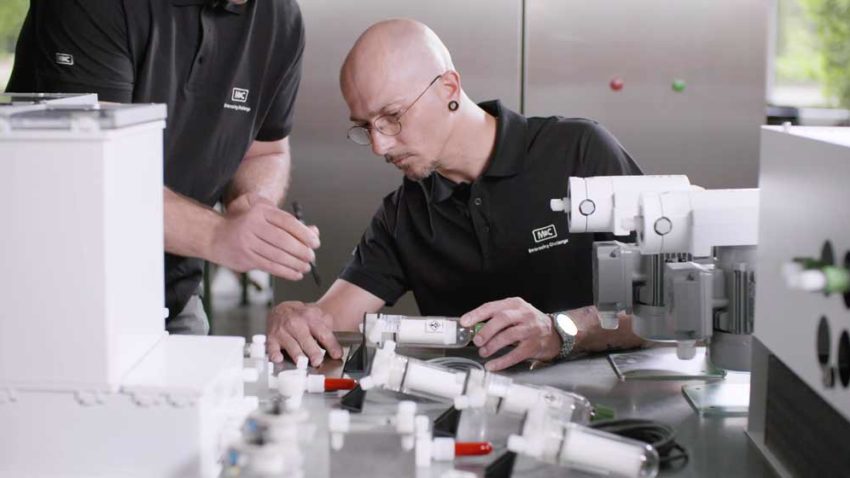
    Mitarbeiter von M&C arbeiten an einem Filter

    M&C – Embracing Challenge

    Trade fair video about the M&C Tech Group

    Ausschnitt aus dem Wachtel Produktvideo

    PICCOLO PRO – Teaser

    PICCOLO PRO

    Satino Imagefilm

    Satino Case Film BBZ Englisch

    Testimonial video of BBZ in Arnsberg

    Paperless Film Production

    Traditionally, film pre-production involves using physical scripts, concepts, and call sheets. To avoid this, we rely on Google’s cloud services. And when it comes to sending quotes or invoices, we also work paperless whenever possible. Cloud-based work has several positive side effects: information is always up-to-date, you can work from anywhere, and no important details get lost. But be careful: if you’re worried about not having internet access on location, make your production documents available offline beforehand.

    In pre-production, we also prioritize online meetings and digital collaboration. Even larger events and meetings can be supplemented or replaced by livestreams to avoid unnecessary travel. This not only saves time but also reduces unnecessary trips and the emissions that come with them. You can find our pro tips for video conferences on our blog.

    Environmentally-friendly Film Production

    Most of a video’s energy and resources are used during the production phase, both on the shoot day itself and in post-production. This means this phase also has the greatest potential for achieving climate-neutral film productions. That’s why it’s crucial to plan during pre-production to ensure the video production is as sustainable and environmentally friendly as possible. Below, you’ll learn which factors are especially important for “green” productions.

    Saving Energy

    It’s clear that electricity consumption is a major source of CO2 emissions in video production. On set, cameras, lights, monitors, and other equipment need power, and in post-production, computers use a lot of energy. For sustainable video productions, the best approach is to use as little energy as possible. It’s essential to raise awareness for environmentally-friendly practices among everyone involved. During filming, technical equipment like cameras or lights should be turned off when not in use, and office computers should be shut down after work.

    It also makes sense to use technology with the lowest possible power consumption. For example, we started using energy-efficient LED lights some time ago and just last year, we switched our data server to a much more energy-efficient technology. Although the initial costs were higher, we save money in the long run and, most importantly, make our film production more sustainable.

    Still, film shoots consume a significant amount of energy. Whenever possible, renewable energy sources should be used. While not every film production can install a solar system on its roof, switching to an eco-friendly electricity provider is a great start. At mindnapped, we’ve been using electricity from renewable sources for years.

    Batterien Akkus Glühbirnen und Led Leuchten Recycling

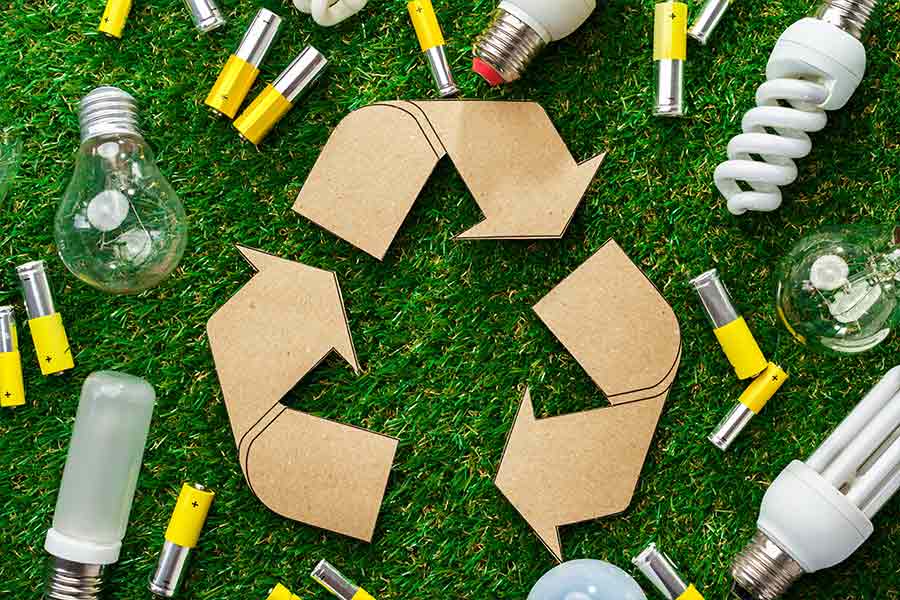
    Use batteries and LED lights to reduce your electricity consumption and save resources.

    Rechargeable Batteries as an Eco-Friendly Alternative

    Many technical devices run on batteries, which has several downsides. Once they’re used up, they can’t be reused and end up as waste. Since batteries contain toxic and hazardous substances like lead, they must be disposed of as special waste; otherwise, they pollute the environment and endanger everyone’s health. That’s why we always use rechargeable batteries instead of single-use ones.

    Even if they are more expensive to buy initially, the investment pays off in the long run—and not just for the environment. Electricity from a power outlet is 300 times cheaper than from a battery! Plus, you can charge your rechargeable batteries with green electricity. By properly storing and charging your rechargeable batteries, you can extend their lifespan and make your film production more sustainable.

    Newsletter

    Link to our privacy policy

    The Right Equipment

    Every year, there are advancements in camera technology and new devices hit the market. But constantly buying new equipment is not only expensive but, more importantly, unsustainable. Some productions also require specific cameras or a large amount of gear. It’s difficult to be equipped for all these scenarios. That’s why renting equipment is a common practice in the film industry and is also good for the environment. You can find rental companies for cameras, lighting, and accessories in all major cities.

    It can also be beneficial to collaborate with other filmmakers. This allows you to lend and borrow rarely used equipment from each other. And if you avoid purchasing unnecessary gear, you save 100% of the energy and resources needed for the production process.

    Speaking of buying: while it might be more expensive at times, for a sustainable film production, it’s best to invest in high-quality equipment from well-known manufacturers. This can extend the useful life and reduce maintenance costs because you have easier access to spare parts. The main goal is to use the technology for as long as possible and, if possible, to repair it. Finally, any equipment that is no longer needed can be resold or recycled.

    Climate-Neutral Travel

    Even though a corporate film production requires a smaller crew than a feature film, travel can still generate a lot of CO2. As a sustainable video production company, we therefore avoid flights and rely on electric mobility. Carpooling and train travel are also great ways to save on emissions. And if a flight is unavoidable, we offset the CO2 emissions.

    Unnecessary travel can also be avoided by hiring local freelancers at the filming location. We do this by leveraging our large network of filmmakers in Germany and across Europe to make our film productions sustainable. Additionally, for distant filming locations, it makes sense to rent large and heavy equipment locally to save weight and space in the car. And for overnight stays, we choose hotels or apartments with an appropriate eco-certification.

    Catering – healthy and sustainable

    Catering nachhaltige Videoproduktion

    A healthy and sustainable food selection for catering tastes great to everyone and is good for the climate.

    On a film set, there’s usually little time for meals, so catering is the norm. To protect the environment, it’s essential to avoid disposable dishes and use reusable, returnable bottles. You can also prevent unnecessary washing up by having everyone label their dishes and glasses with their name, so they only use what they need. On our productions, we always offer vegetarian options and make sure to ask about allergies or preferences beforehand to avoid waste. Alternatively, it can be a good idea to switch to a fully vegan menu, which everyone can eat and therefore requires fewer options. We also provide plenty of trash cans and bags to ensure waste is sorted and disposed of correctly.

    Conclusion

    Whether it’s about travel, energy consumption, or recycling, many of the points in this article are relevant outside of film production. Most people have already integrated environmentally conscious habits into their daily lives. But for some reason, people are often less mindful when it comes to film shoots. After all, a film shoot isn’t an everyday occurrence, and things like single-use batteries, individually wrapped snacks, and printed scripts are just convenient. Besides, would 100 sheets of paper really make a difference?

    We believe we all share a collective responsibility for our planet and hope we’ve given you some ideas for making your next film production more sustainable. Because every small step toward sustainability counts! If you want to learn more about sustainable video production or how to implement a green production, feel free to contact us. We’d be happy to advise you on customized options for green productions.

    Looking to create sustainable film productions?

    Get in touch for a free initial consultation.

    Contact
    Portrait von Alexander Lorenz, Videoberatung bei mindnapped Filmproduktion Düsseldorf

    Related Articles

    How to Conduct a Video Interview – making video interviews a success

    Successful: Social Media Video from Climate Conference

    Create a Moodboard for Free – Overview over the Best Workflows and Tools